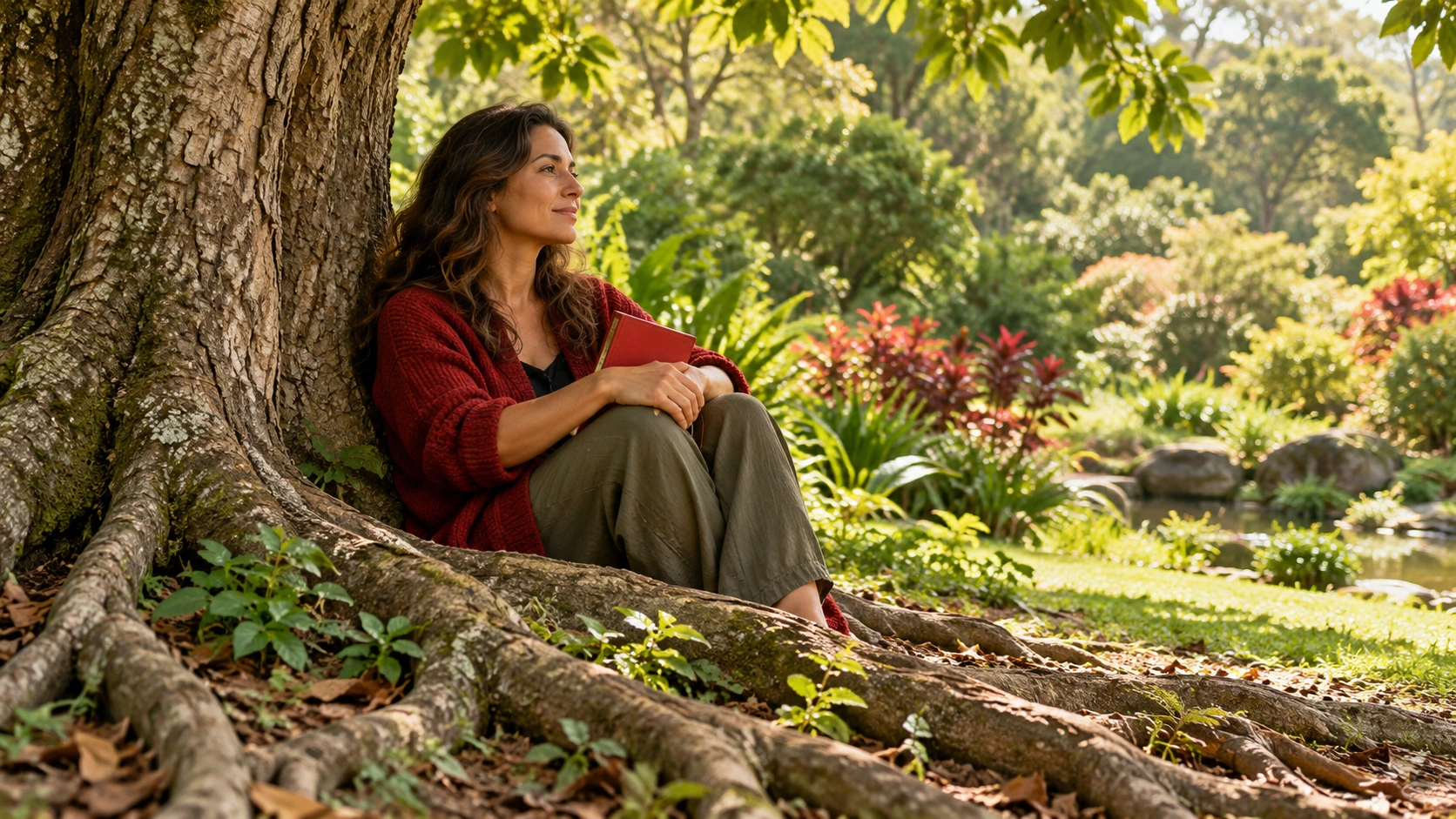
In chakra traditions, the root chakra, also called Muladhara, is associated with red and themes of stability, security and belonging. This article explores those ideas as spiritual symbolism and a starting point for personal reflection.
What makes a place feel like home? Which routines help you feel settled? What does having a strong foundation mean to you? Root chakra symbolism offers a colorful way to explore these everyday questions.
What Does the Root Chakra Mean?
Within the familiar seven-chakra framework, Muladhara is the first chakra and is represented at the base of the spine. Its imagery often includes a red lotus and an inverted triangle.
The root is a useful metaphor: just as roots provide a plant with a foundation, this symbol invites reflection on the things that give your life a sense of continuity. Home, relationships, familiar places and daily routines can all become part of that reflection.
Different teachers and practitioners interpret chakra imagery in different ways. You can approach these ideas with curiosity without needing to assign a fixed meaning to every feeling or experience.
Why Is the Root Chakra Associated With Red?
Red is the color commonly associated with Muladhara in contemporary seven-chakra imagery. It provides a vivid visual theme for exploring ideas such as strength, vitality and a connection with the earth.
Your own associations may be different. Red might remind you of a favorite landscape, a meaningful object, warmth or creative expression. Noticing these connections can make color symbolism more personal.
Harmony and Disharmony in Root Chakra Traditions
In root chakra traditions, harmony can describe a sense of being grounded, connected and at home in your life. Disharmony can describe feeling out of step with those themes, especially during change or uncertainty.
A move, a new job or a change in routine can prompt questions about what feels familiar and dependable. You can use harmony and disharmony as a language for reflection on your sense of belonging and what matters to you.
Try these questions as journal prompts:
- Which places give me a sense of belonging?
- What makes my daily routine feel manageable?
- Who are the people I can turn to?
- Which commitments do I want to make more room for?
- What would a supportive home environment look like to me?
There is no required answer or score. The purpose is to notice your own priorities.
Exploring the Symbolism Through Nature
Trees, gardens and familiar outdoor places offer a natural connection to the root metaphor. You might observe the shape of tree roots, sketch a landscape or spend time tending a plant.
These can simply be enjoyable activities. In a root-chakra reflection, the same experiences can become prompts for thinking about patience, continuity and your relationship with the places around you.
Bringing Red Into Everyday Rituals
Color can provide a simple creative theme. A red notebook, a piece of fabric or a photograph might serve as a visual reminder of an intention you have chosen.
Some people also include red foods, such as apples, tomatoes or radishes, in color-themed rituals. Their color can connect a shared meal or seasonal tradition with the themes of warmth, belonging and everyday care.
Choose objects and activities that already have meaning for you. A personal ritual does not need special equipment or a prescribed set of purchases.
Movement and Creative Expression
Walking, dancing or familiar yoga movements can become part of a personal ritual if you enjoy them. The root theme might inspire you to notice your surroundings, explore a steady rhythm or express the idea of having a foundation through movement.
You can also explore the same theme without movement: write a short passage, make a collage or photograph the colors and textures of a place that feels like home.
A Simple Reflection Practice
Choose a comfortable setting and a word such as "belonging," "steadiness" or "home." Spend a few moments considering what that word means in your life.
A red object, artwork or stone can be a visual focal point. Its role is to represent an idea you have chosen. You might finish by writing one sentence about something you appreciate or a small action you would like to take.
Affirmations and Journal Prompts
Affirmations can be used as personal intentions. Adapt them so they feel honest and relevant to your circumstances:
- I can make room for what matters to me.
- I value the people and places that support me.
- I can take one step at a time.
- I am learning what belonging means to me.
- I can create routines that reflect my priorities.
If a statement does not fit, turn it into a question. "I feel at home" might become "What would help this space feel more like home?"
Color, Reflection and Aura Photography
Color symbolism is also part of the way some people explore aura photography. A colorful portrait can become a conversation starter about personal associations, creative expression and aura traditions.
AuraCamera® 6000 creates instant-film portraits using hand-sensor input and proprietary processing to produce a color rendering around the subject. A photographer can use the finished colors to invite a conversation about the places, relationships and routines that give you a sense of belonging.
Explore aura photography or learn how AuraCamera® 6000 works.
Closing Reflection
The root chakra offers a symbolic language for thinking about foundations: the places, people and routines that shape your sense of belonging. You can explore that language through color, creative activities or a few thoughtful questions that make room for your own experiences.
Start with the question that feels most relevant to you: what does a strong foundation look like in my life today?